A MOTHER'S RIGHT
Page four
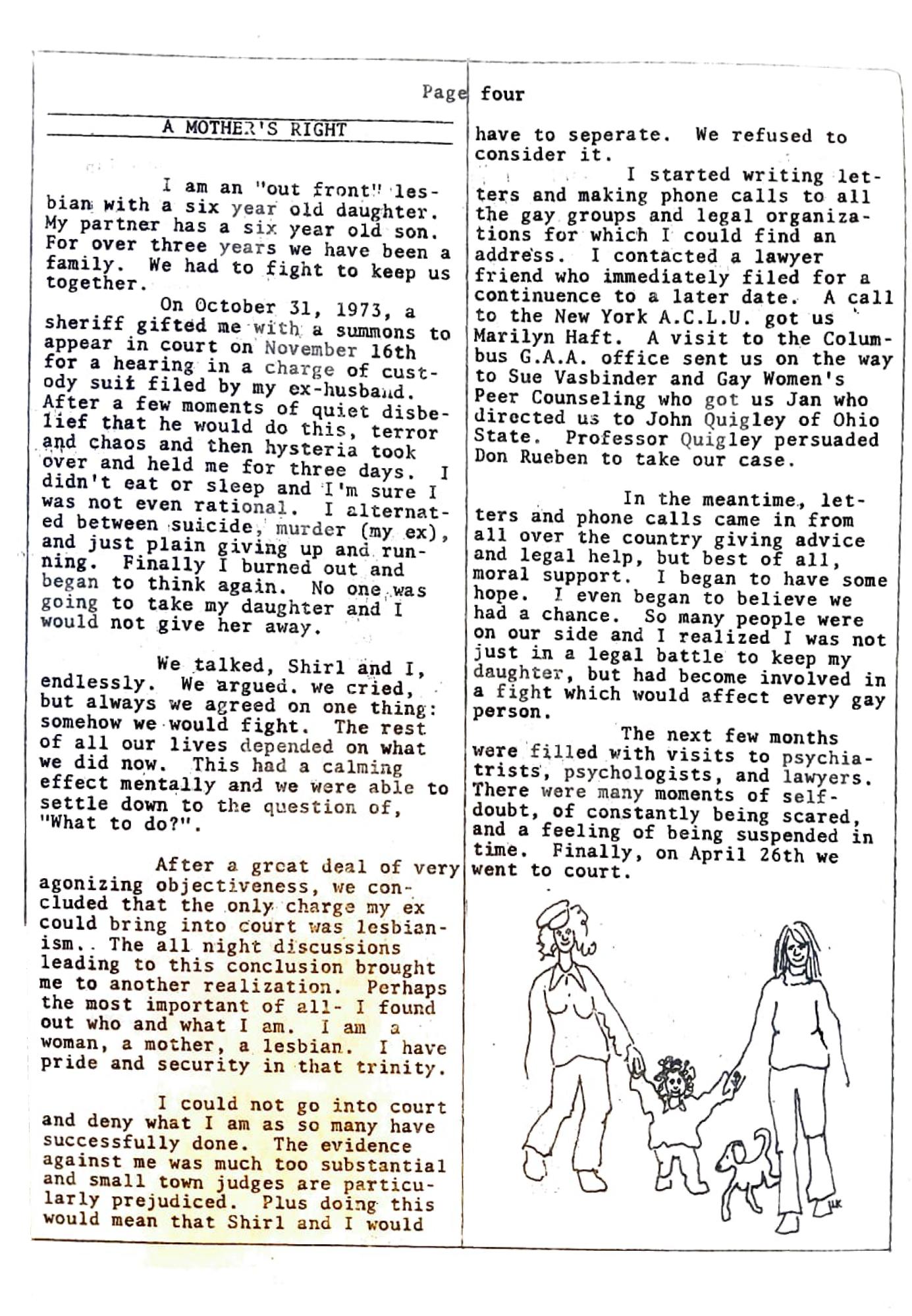
I am an "out front!! lesbian with a six year old daughter. My partner has a six year old son. For over three years we have been a family. We had to fight We had to fight to keep us together.
On October 31, 1973, a sheriff gifted me with a summons to appear in court on November 16th for a hearing in a charge of custody suit filed by my ex-husband. After a few moments of quiet disbelief that he would do this, terror and chaos and then hysteria took over and held me for three days. I didn't eat or sleep and I'm sure I was not even rational. I alternated between suicide, murder (my ex), and just plain giving up and running. Finally I burned out and began to think again. No one was going to take my daughter and I would not give her away.
We talked, Shirl and I, endlessly. We argued. we cried, but always we agreed on one thing: somehow we would fight. The rest of all our lives depended on what we did now. This had a calming effect mentally and we were able to settle down to the question of, "What to do?".
After a great deal of very agonizing objectiveness, we concluded that the only charge my ex could bring into court was lesbianism. The all night discussions leading to this conclusion brought me to another realization. Perhaps the most important of allI found out who and what I am. I am a woman, a mother, a lesbian. I have pride and security in that trinity.
I could not go into court and deny what I am as so many have successfully done. The evidence against me was much too substantial and small town judges are particularly prejudiced. Plus doing this would mean that Shirl and I would
have to seperate. We refused to
consider it.
I started writing letters and making phone calls to all the gay groups and legal organizations for which I could find an address. I contacted a lawyer friend who immediately filed for a continuence to a later date. A call to the New York A.C.L.U. got us Marilyn Haft. A visit to the Columbus G.A.A. office sent us on the way to Sue Vasbinder and Gay Women's Peer Counseling who got us Jan who directed us to John Quigley of Ohio State. Professor Quigley persuaded Don Rueben to take our case.
In the meantime, letters and phone calls came in from all over the country giving advice and legal help, but best of all, moral support. I began to have some hope. I even began to believe we had a chance. So many people were on our side and I realized I was not just in a legal battle to keep my daughter, but had become involved in a fight which would affect every gay person. The next few months were filled with visits to psychiatrists, psychologists, and lawyers. There were many moments of selfdoubt, of constantly being scared, and a feeling of being suspended in time. Finally, on April 26th we went to court.